The Big Craft
Industrial Design + Furniture Design
Overview
I got kicked out of the Westphal woodshop after graduating, so I built one of my own :)
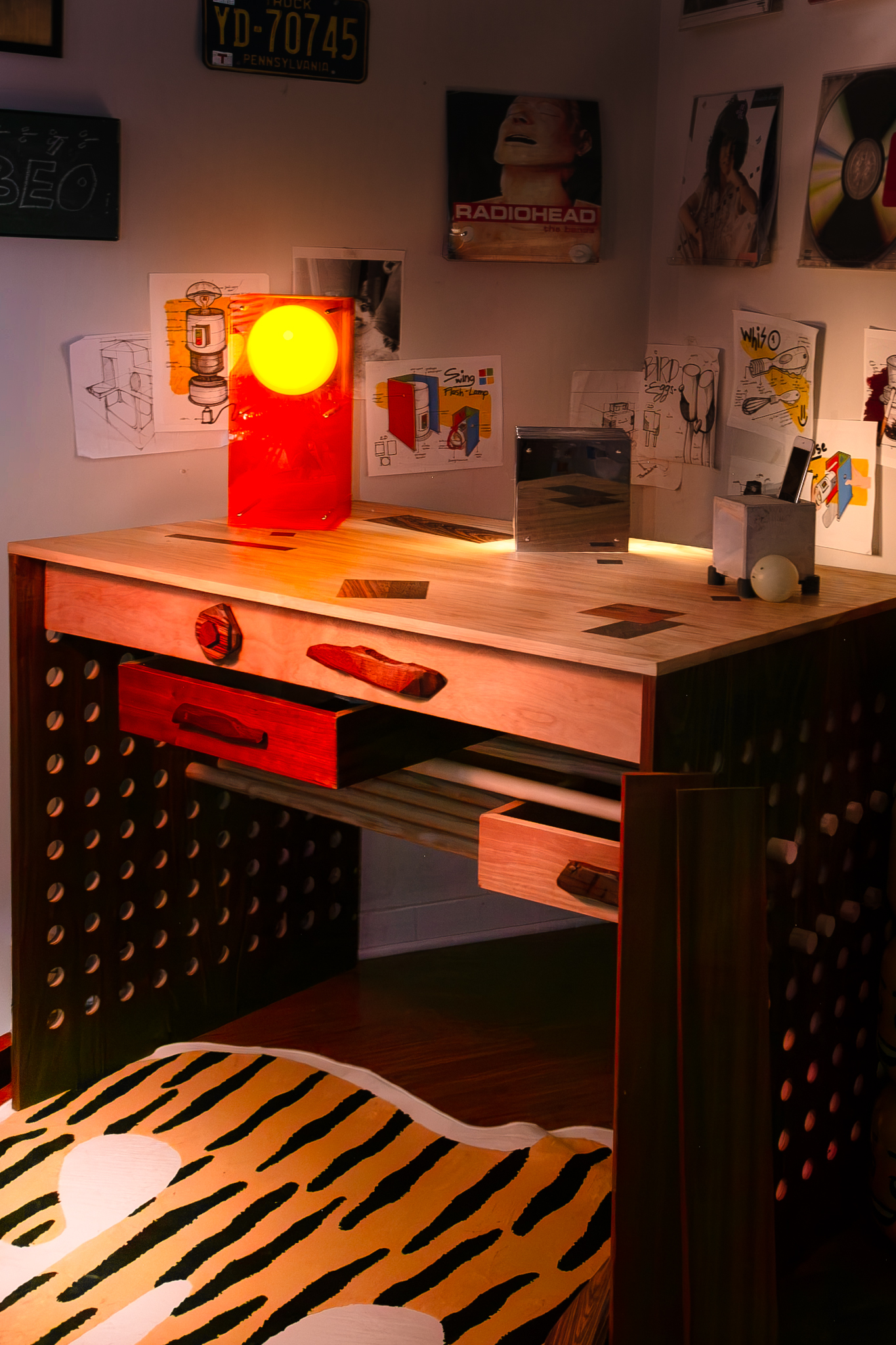
The Big Craft is my interpretation of the creative process, a workstation designed to adapt as quickly as my ADHD brain does. I wanted it to be as modular and customizable as possible, giving me the freedom to repair, experiment, and make whatever project I put on it in whatever way feels right. It is how I prove to myself that I can embrace my own unpredictability, that I do not have to fight my own thinking process.
- Timeline
- 3 months
- Team
- Me!
- Status
- Completed!
Crafting spaces are messy because making is messy.
This project began by identifying the needs of my future workspace after graduating from Drexel, when I would no longer have access to the Westphal studios. The goal was to design a modular crafting table that could be easily disassembled for moving while providing efficient tool storage and adapting to different making workflows.
Sketches
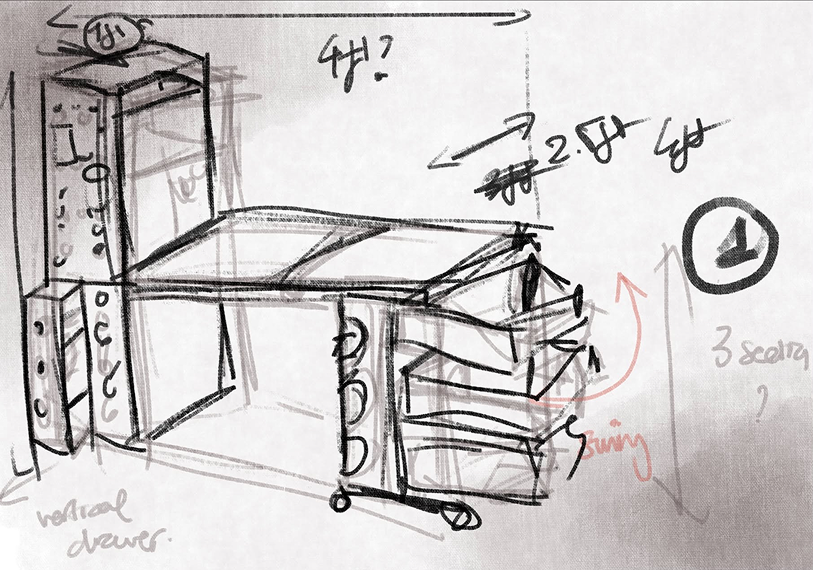
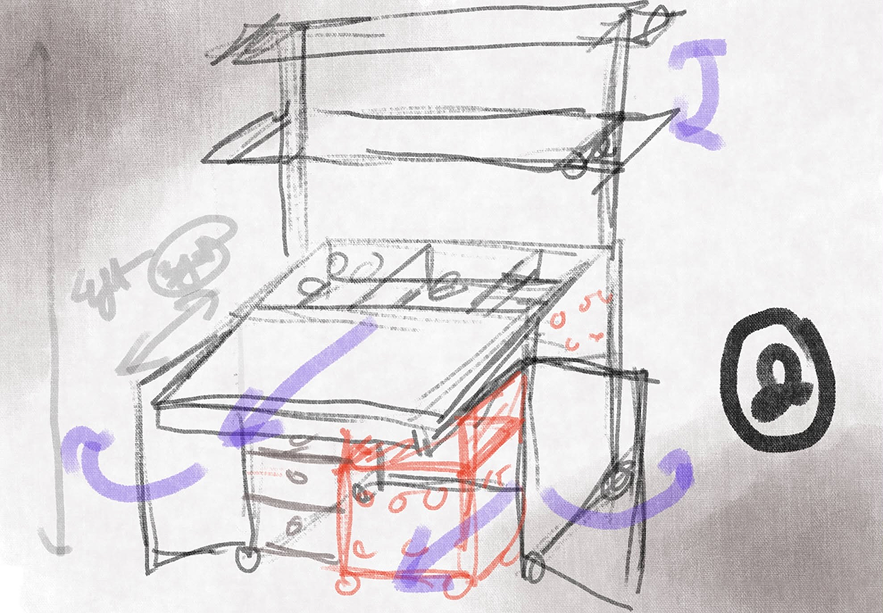
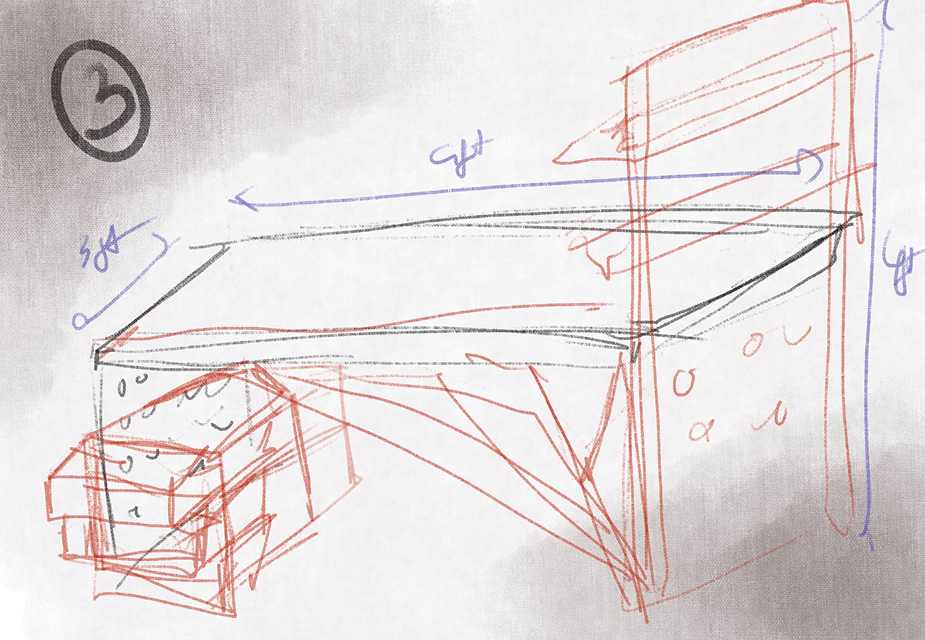
Early sketches explored a range of configurations, including integrated pegboards, modular drawer systems, moving cart, and foldable work surfaces.
These concepts established the project's core design principles: modularity, adaptability, and portability.
Initial Design
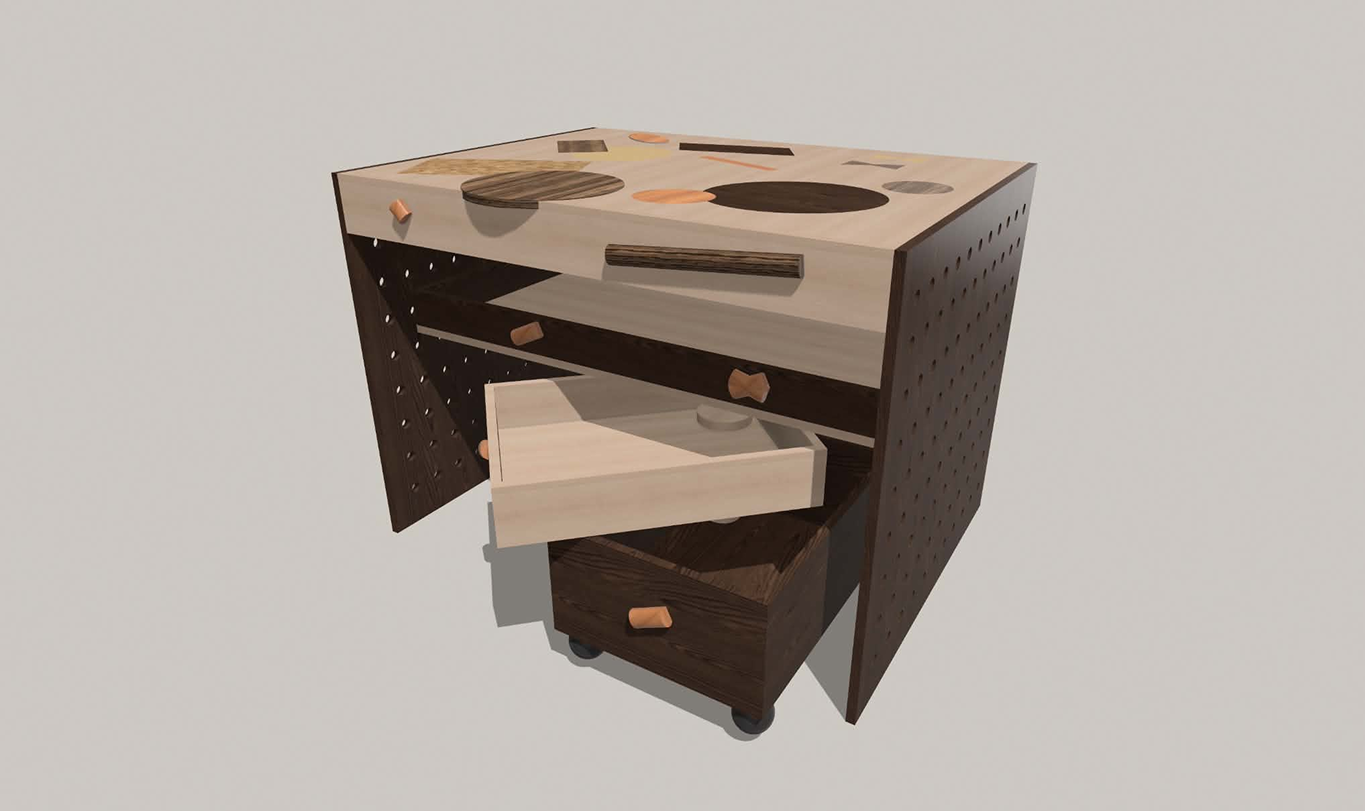
Following research into existing workbenches, construction methods, and hardware, I created my initial sketches into a 3D model. The first iteration featured two drawer slide systems, a pull-out work surface, and a pair of swing-out mobile storage carts to maximize flexibility and accessibility.
Due to time and budget constraints, I simplified it into a second iteration that retained the core functionality while improving its feasibility for fabrication.
Final Design
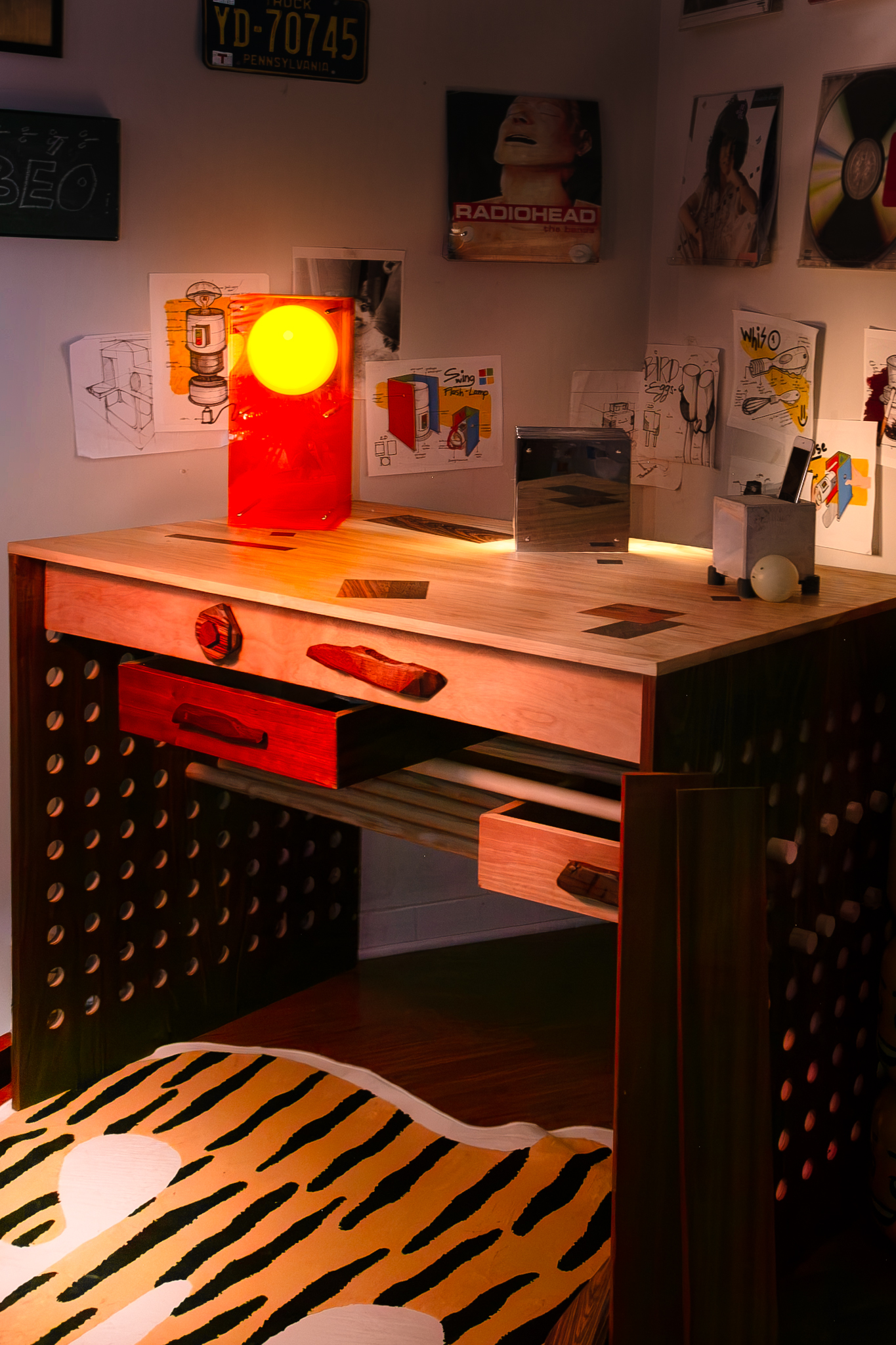
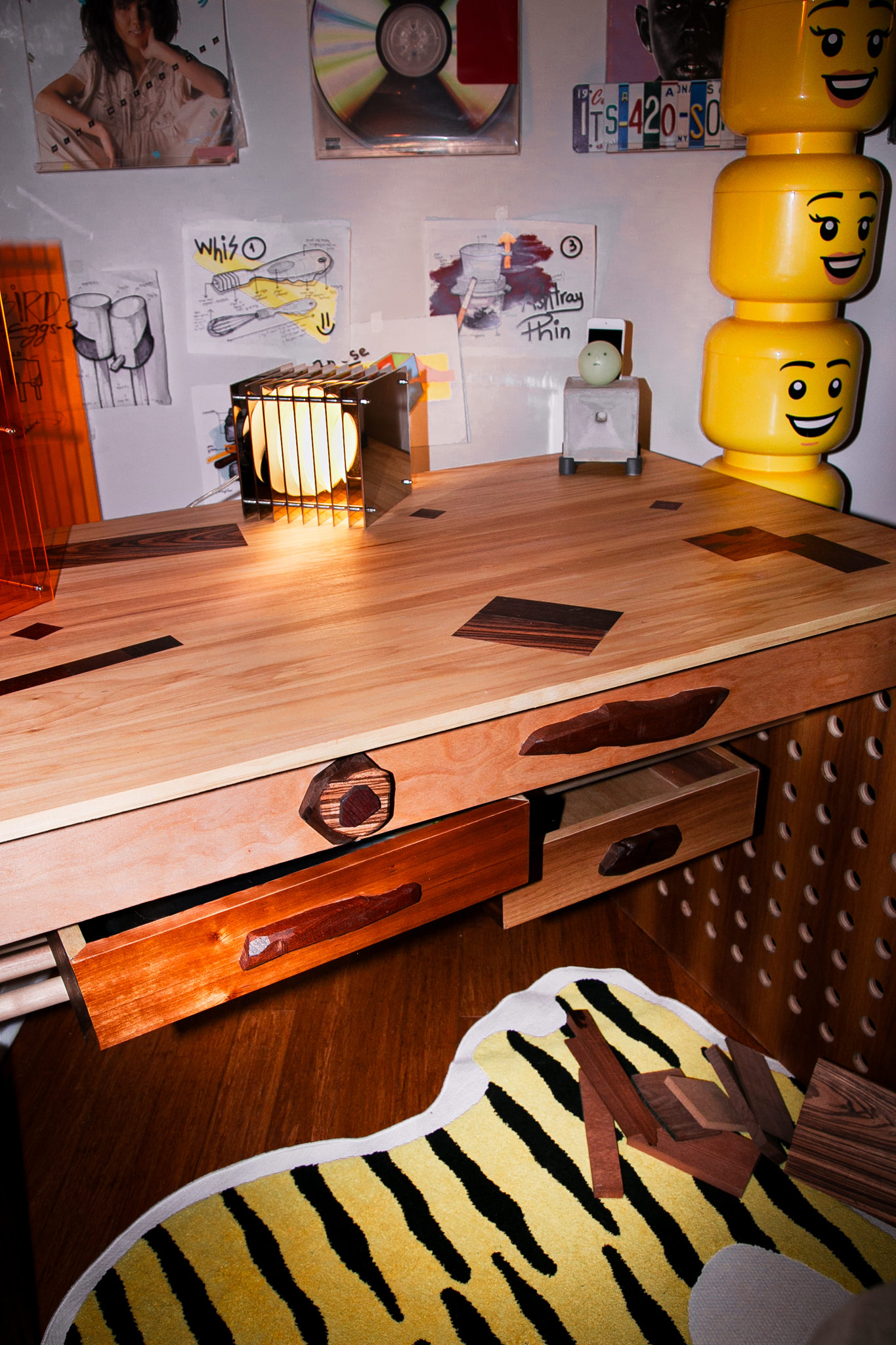
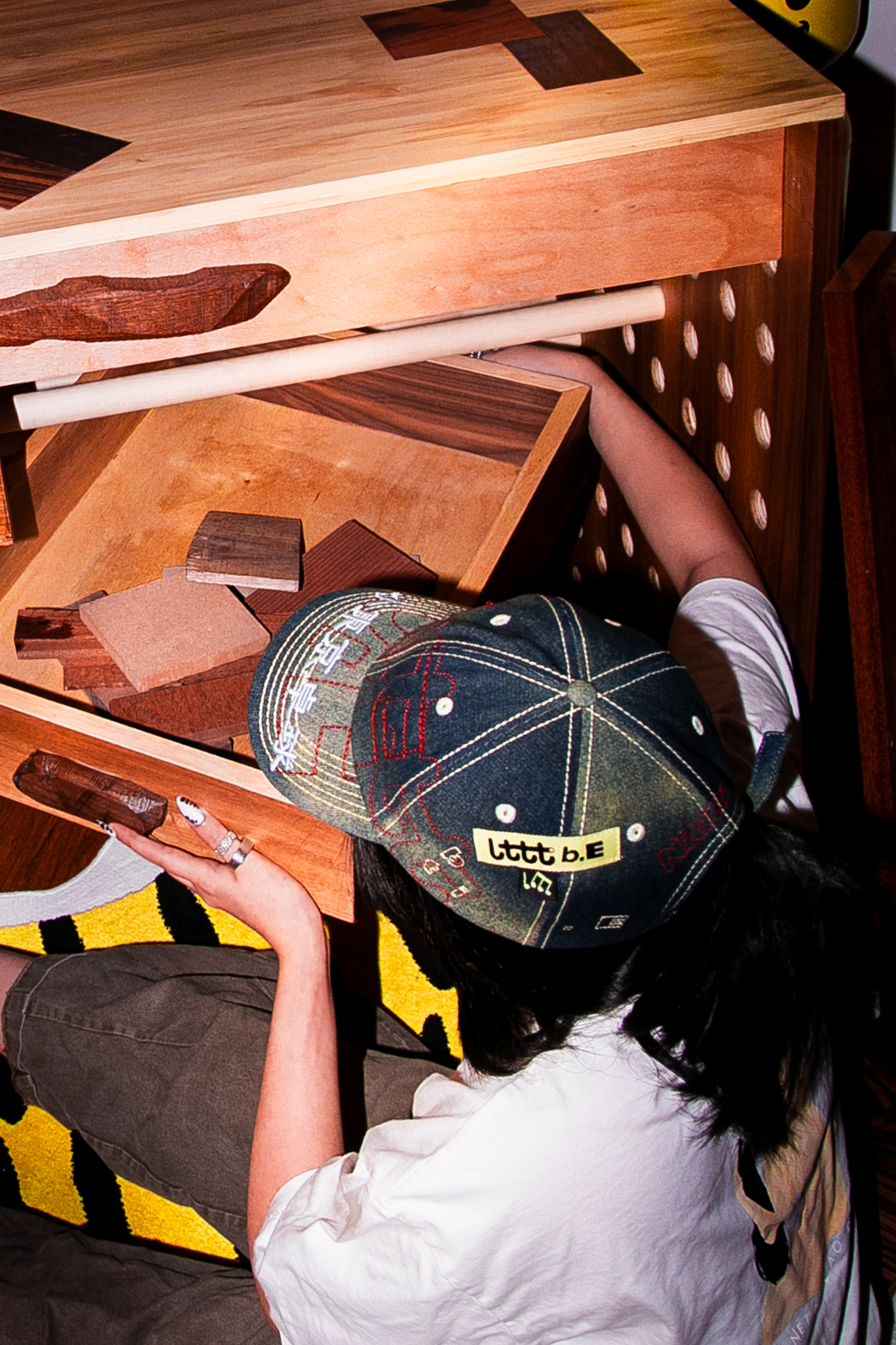
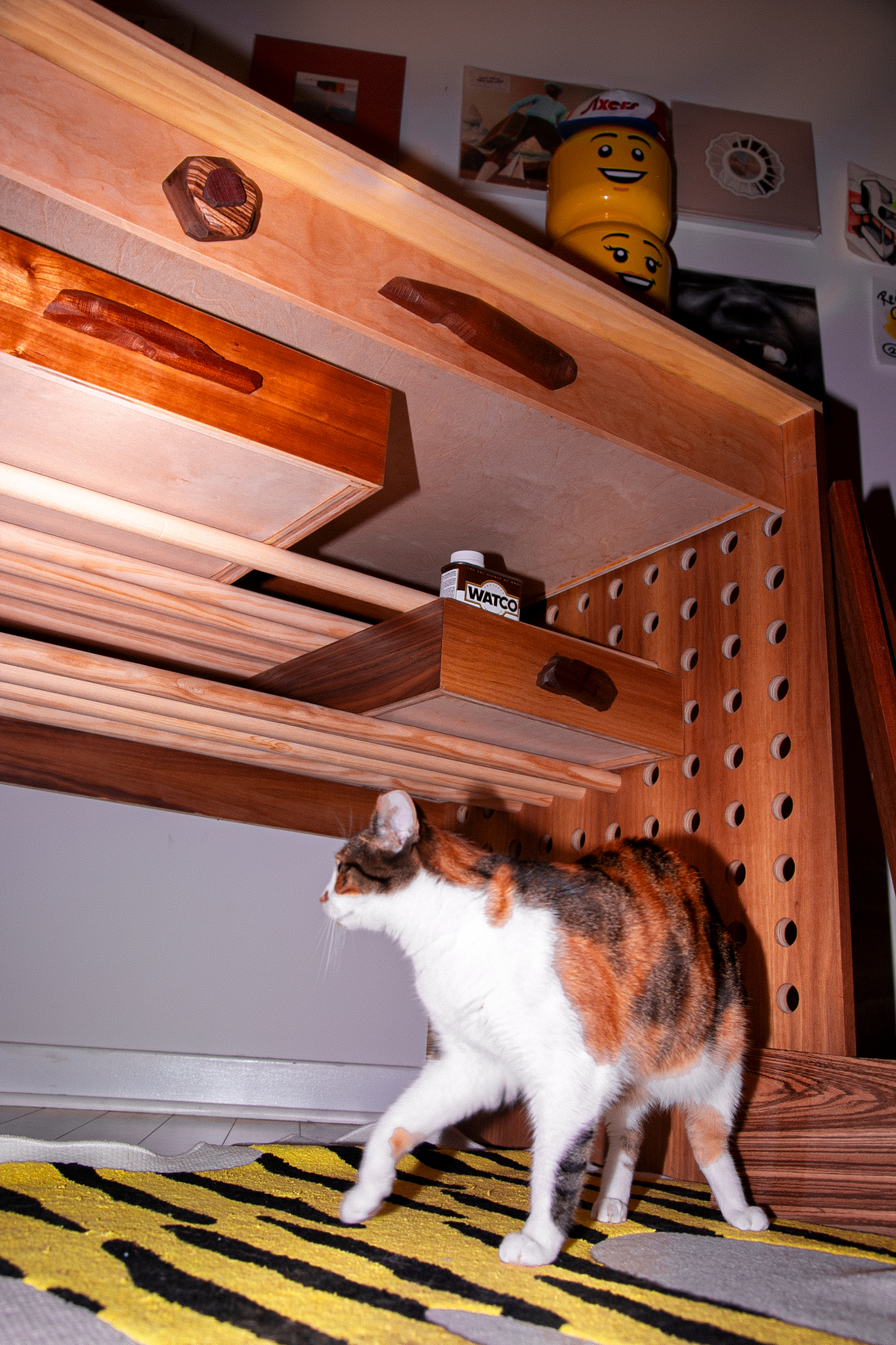
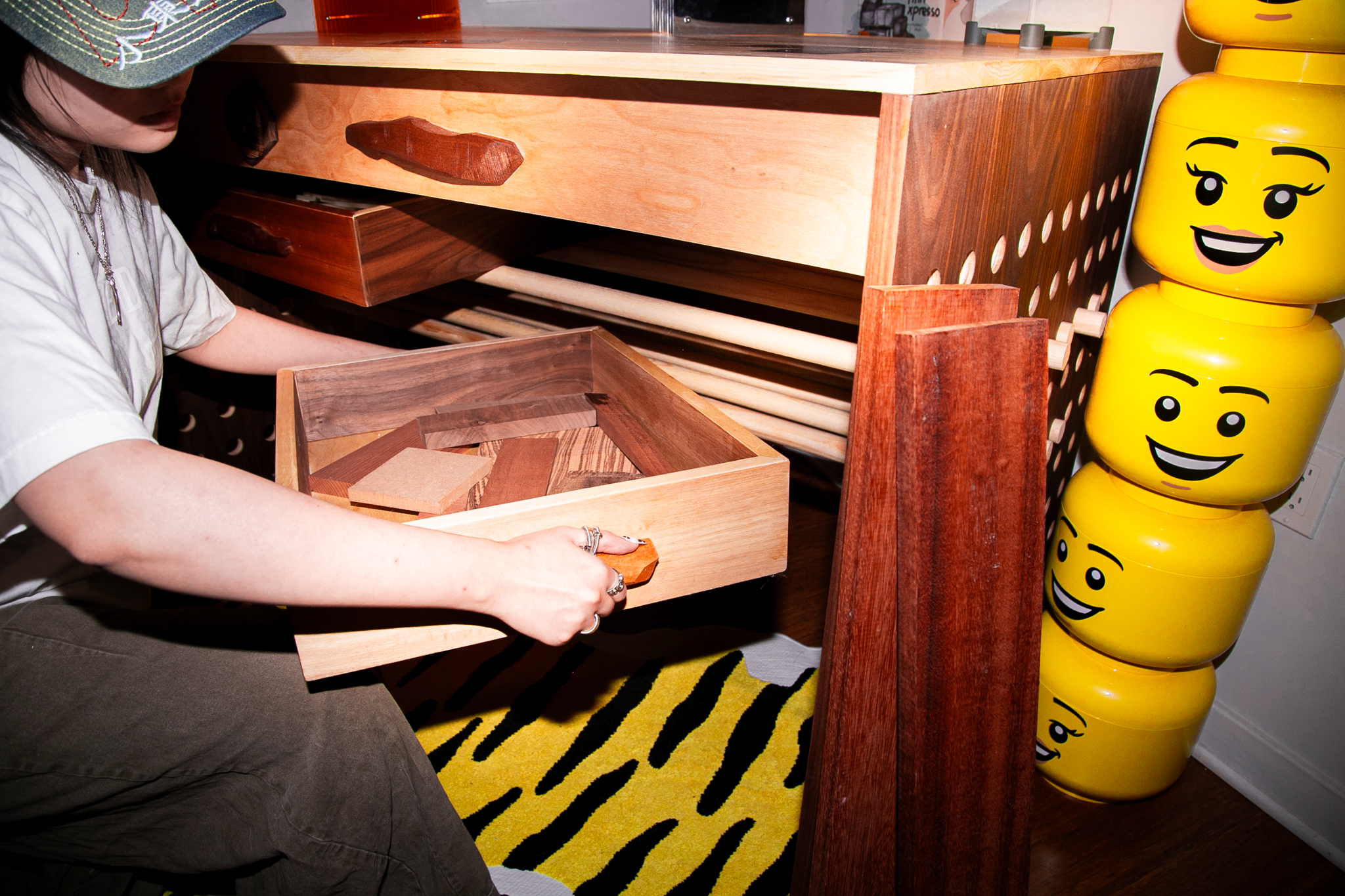
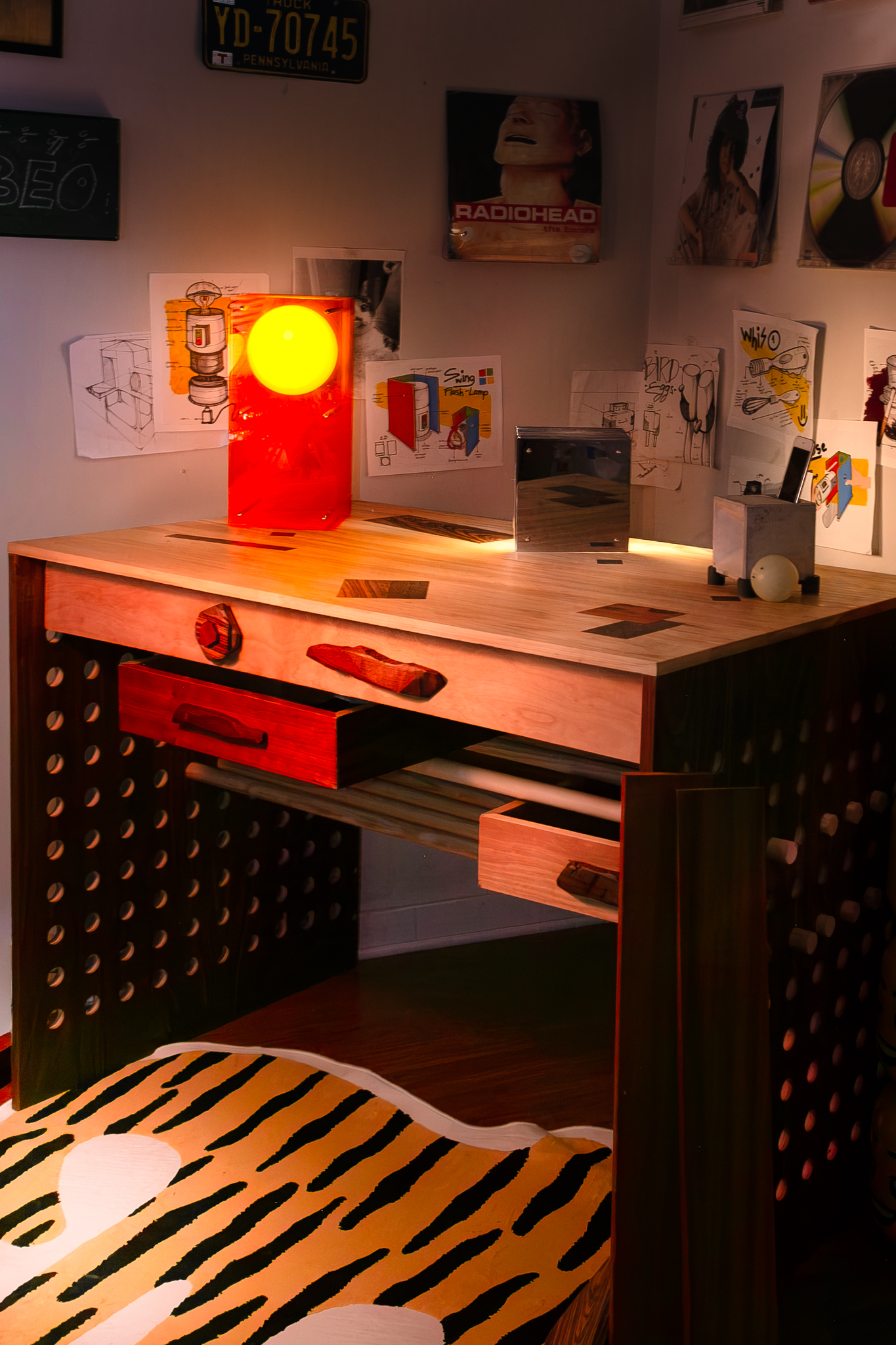
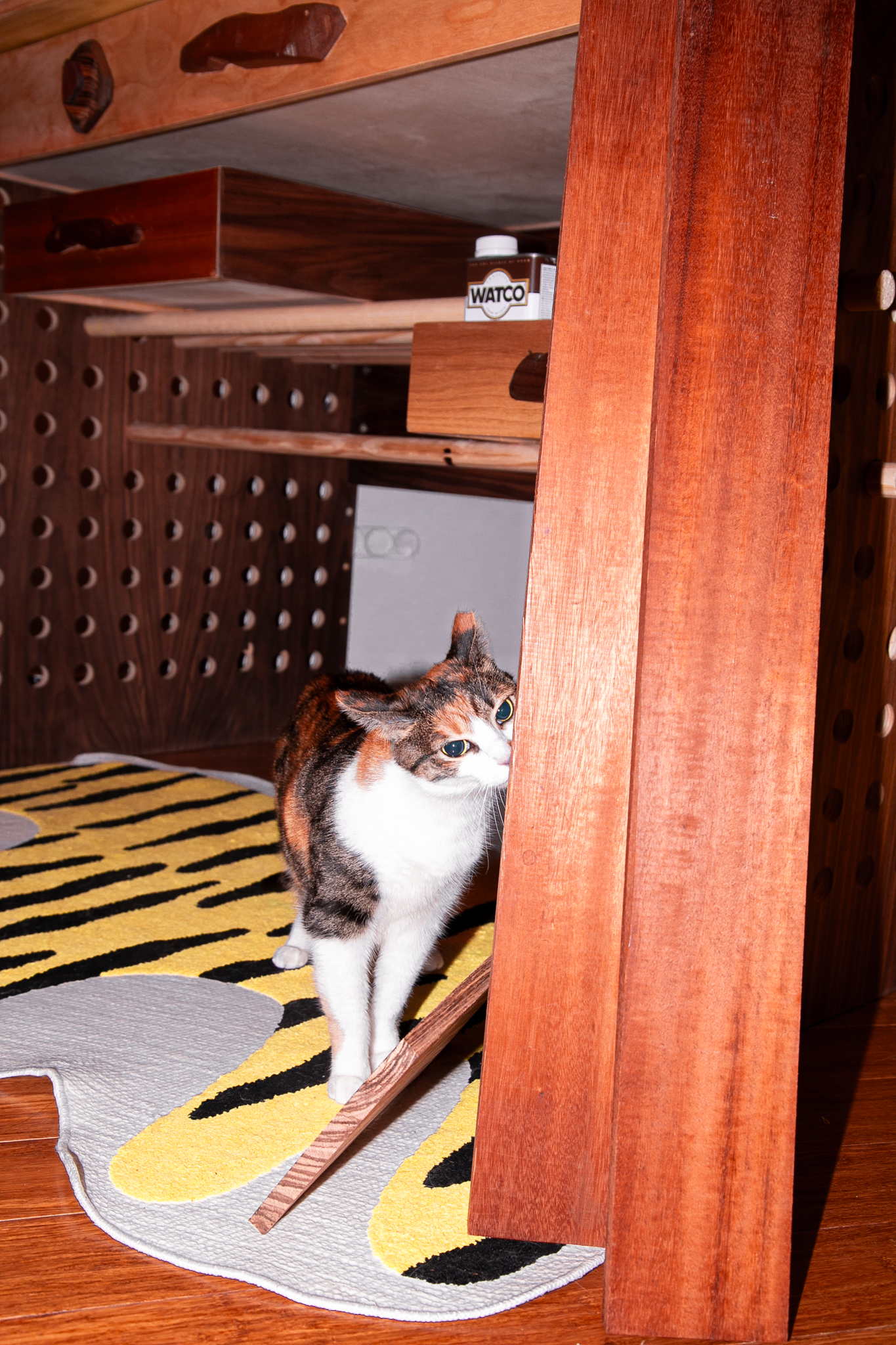
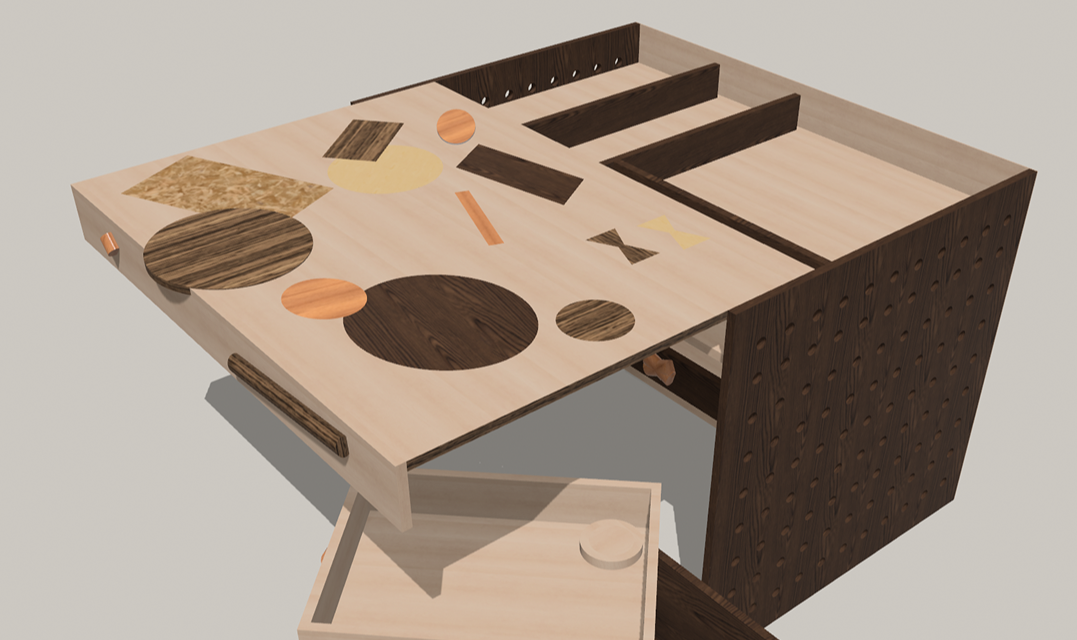
The final design simplifies the original concept to a single sliding drawer paired with a modular tray-and-dowel storage system. The trays rest on adjustable dowels through the pegboard sides, allowing the storage layout to be reconfigured based on the tools and project at hand. The removable trays also make it easy to transport materials between workspaces, reflecting how I organize and work with ADHD.
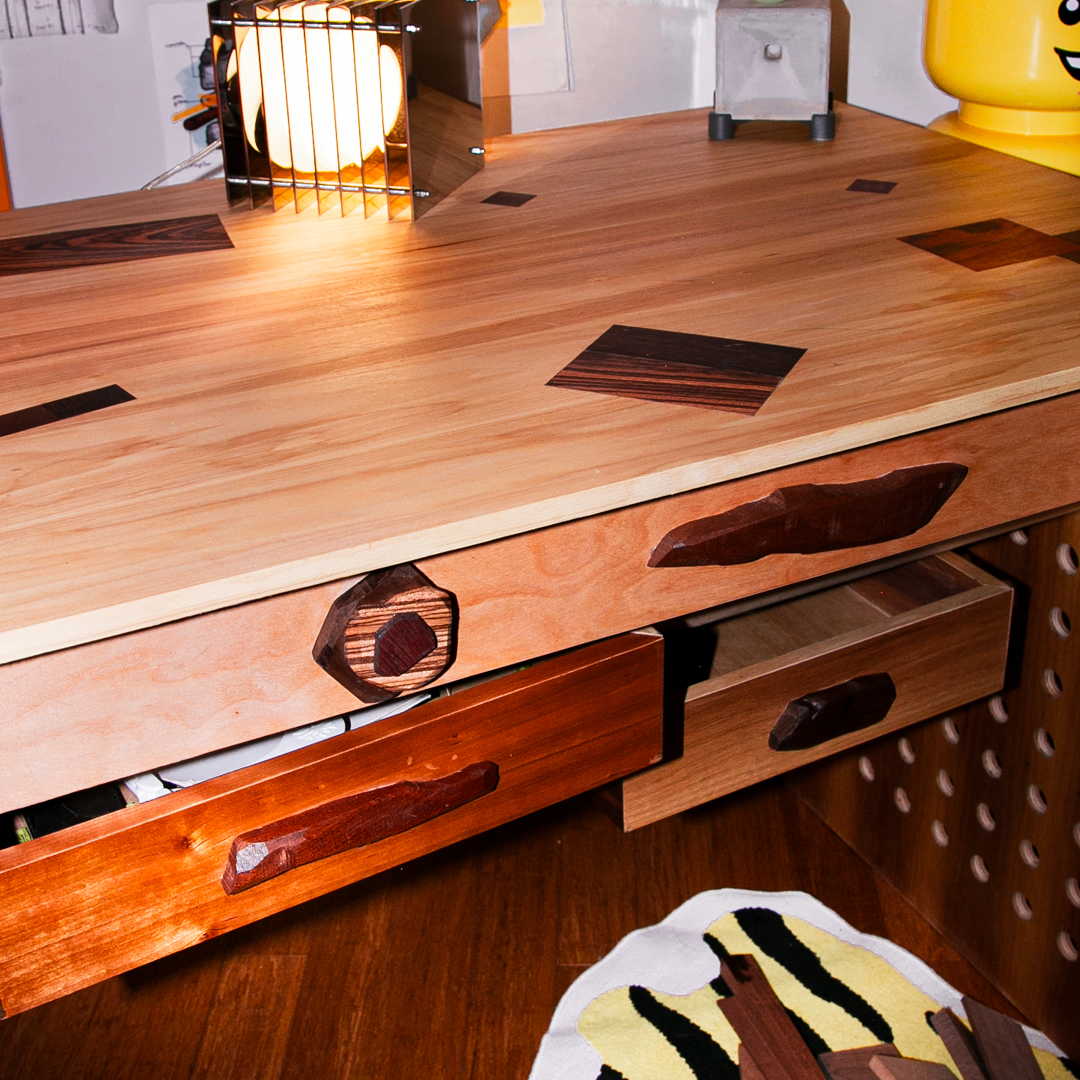
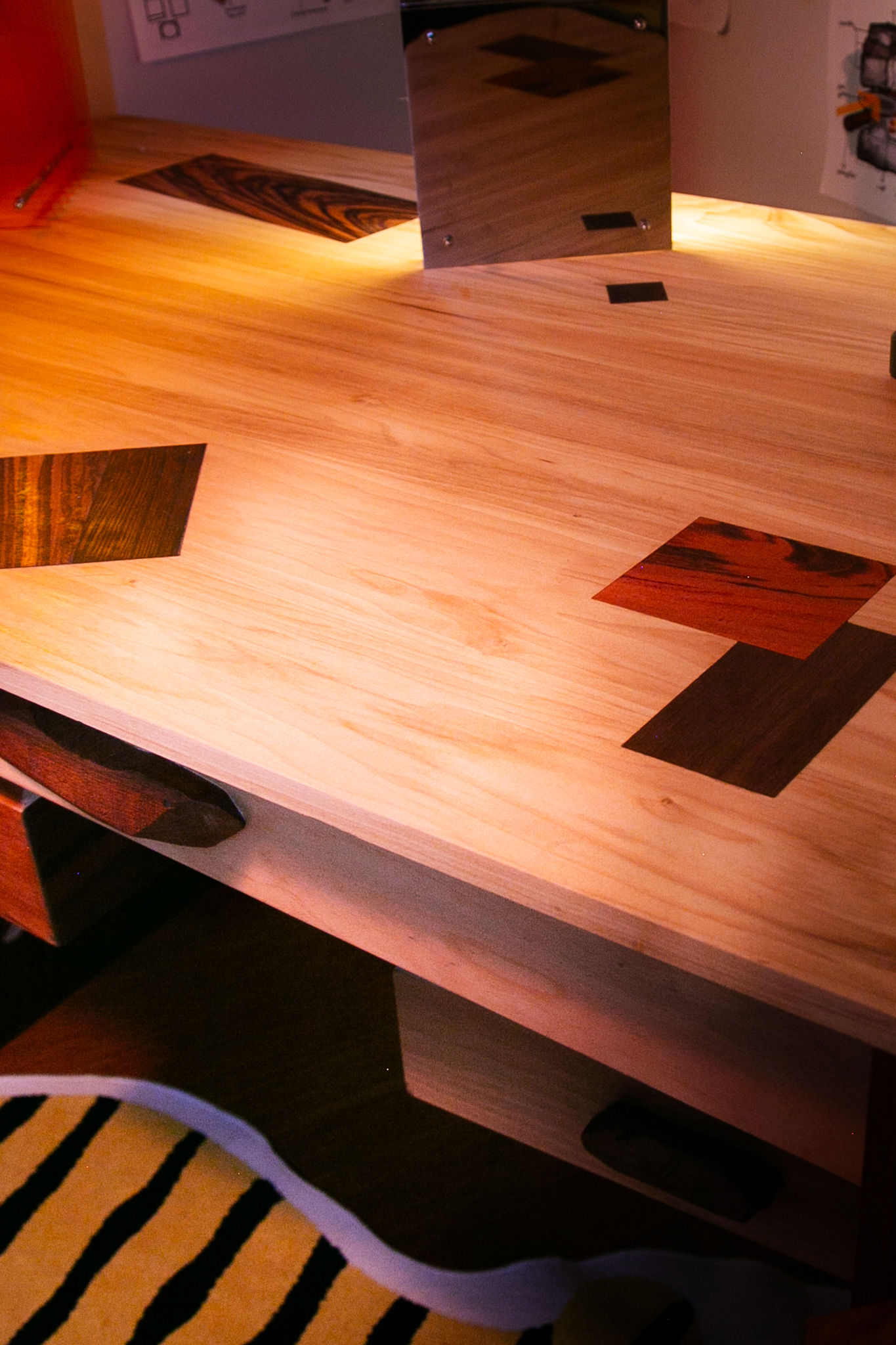
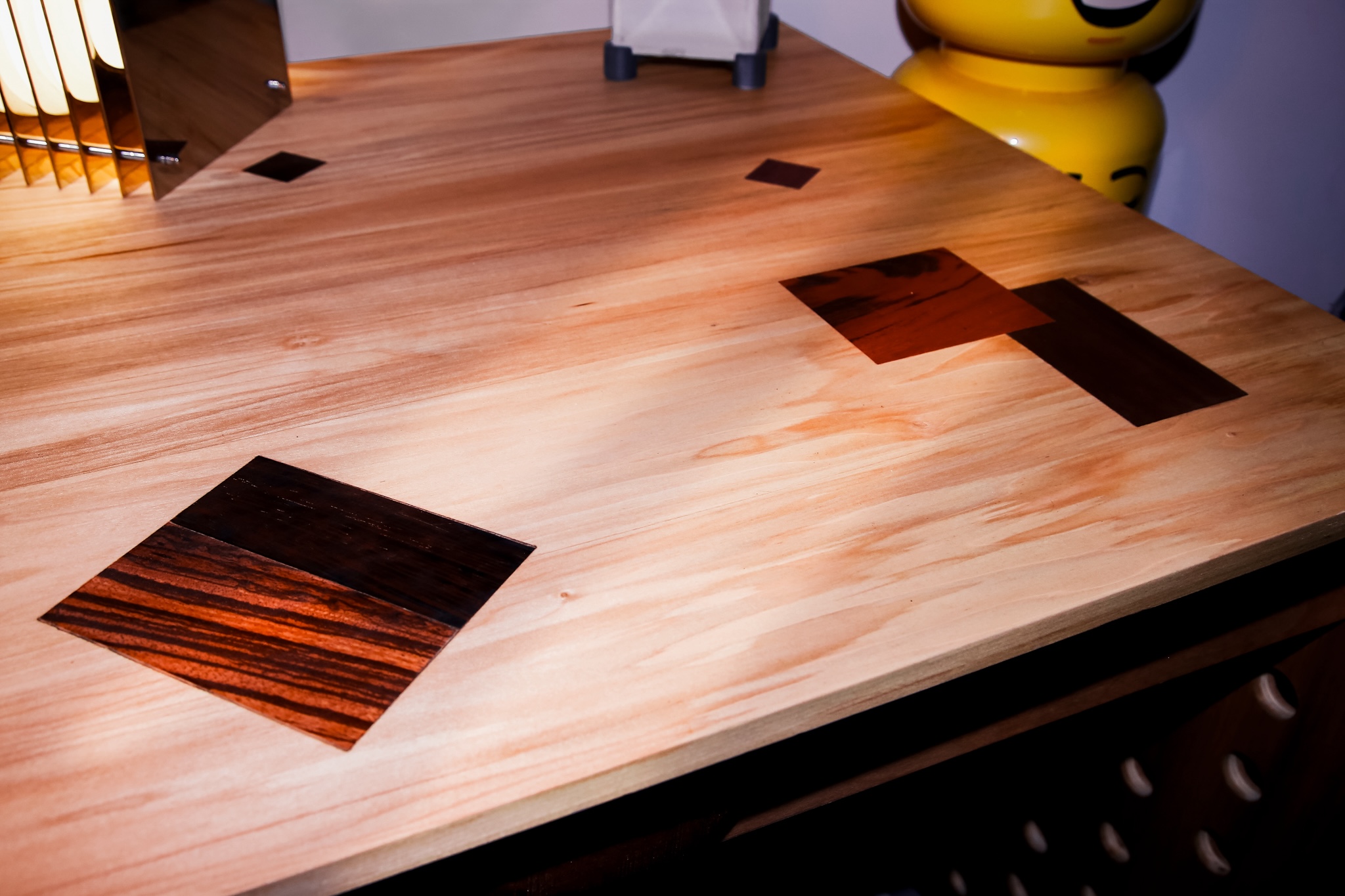
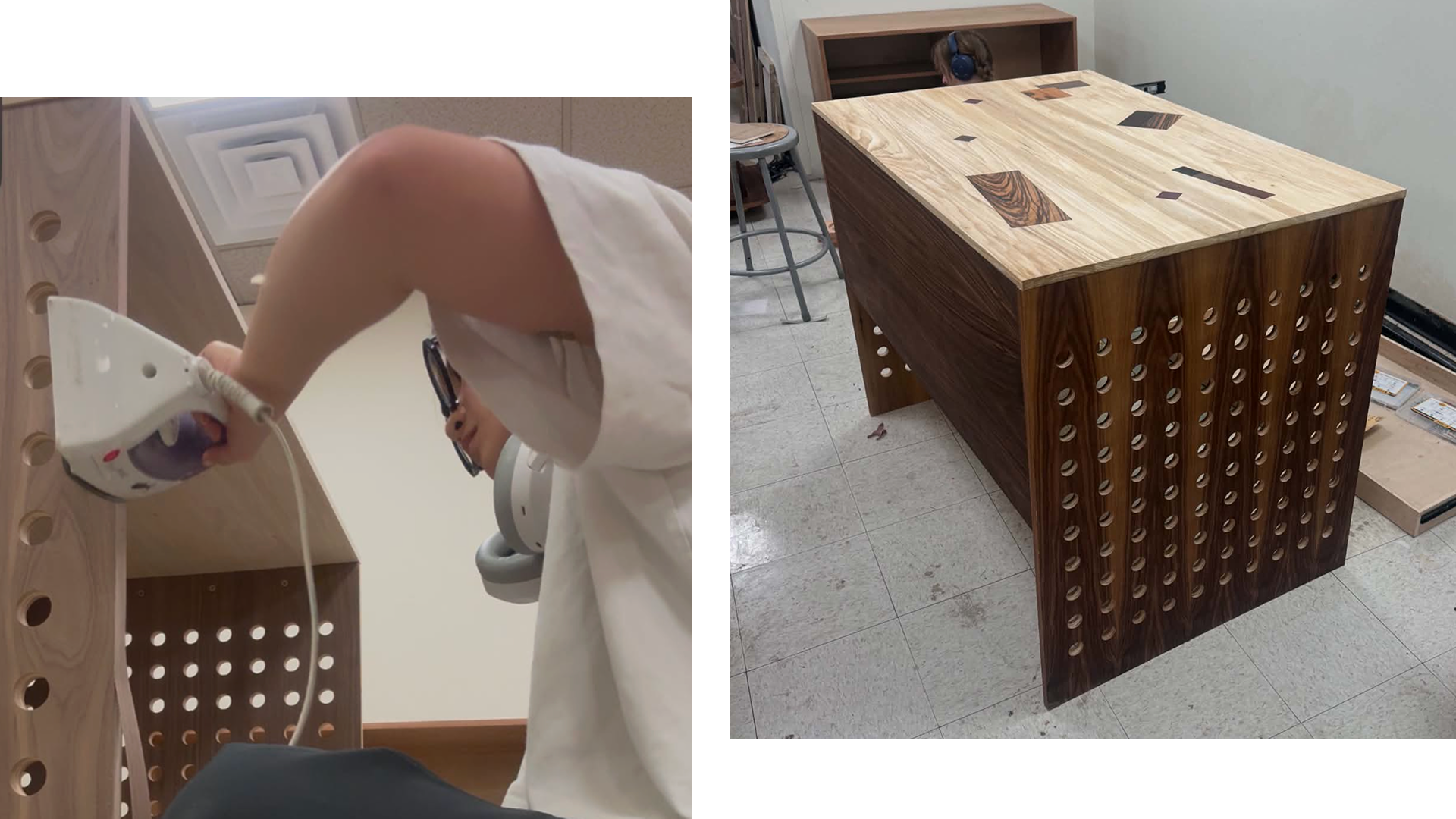
The tabletop features an inlaid hardwood surface with multiple exotic wood species, a personal choice inspired by my ADHD and preference for visual and material variety. It was designed with a large work surface and standing-height proportions to support a wide range of making activities.
Lumber Yard Field Trip
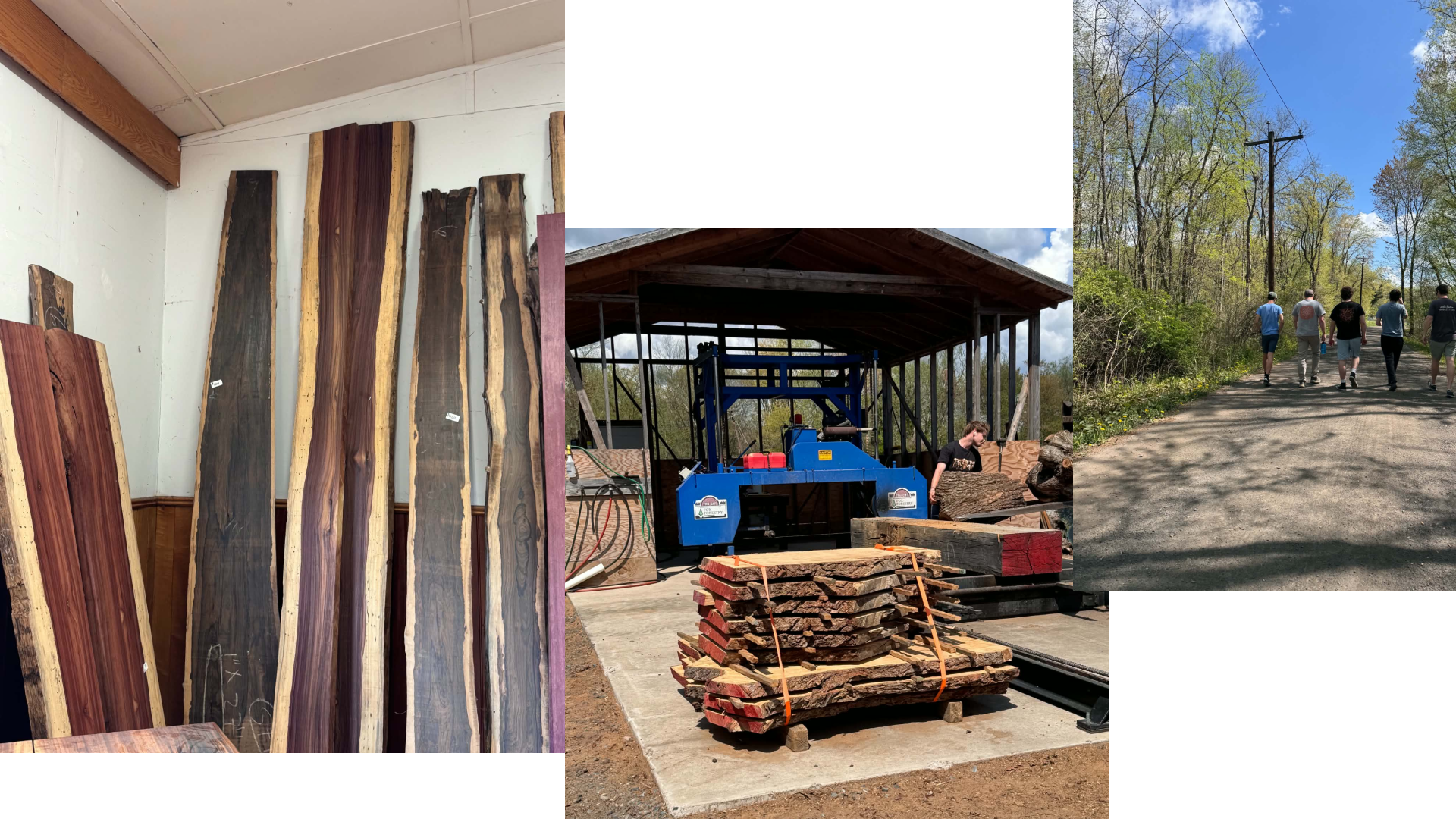
A visit to Willard Brothers Lumber Yard gave me the opportunity to source hardwood while learning about the lumber preparation process, including milling, air drying, kiln drying, and grading.
Exploring a wide range of domestic and exotic wood species also helped inform my material selection for the tabletop inlay.
Wood Choices
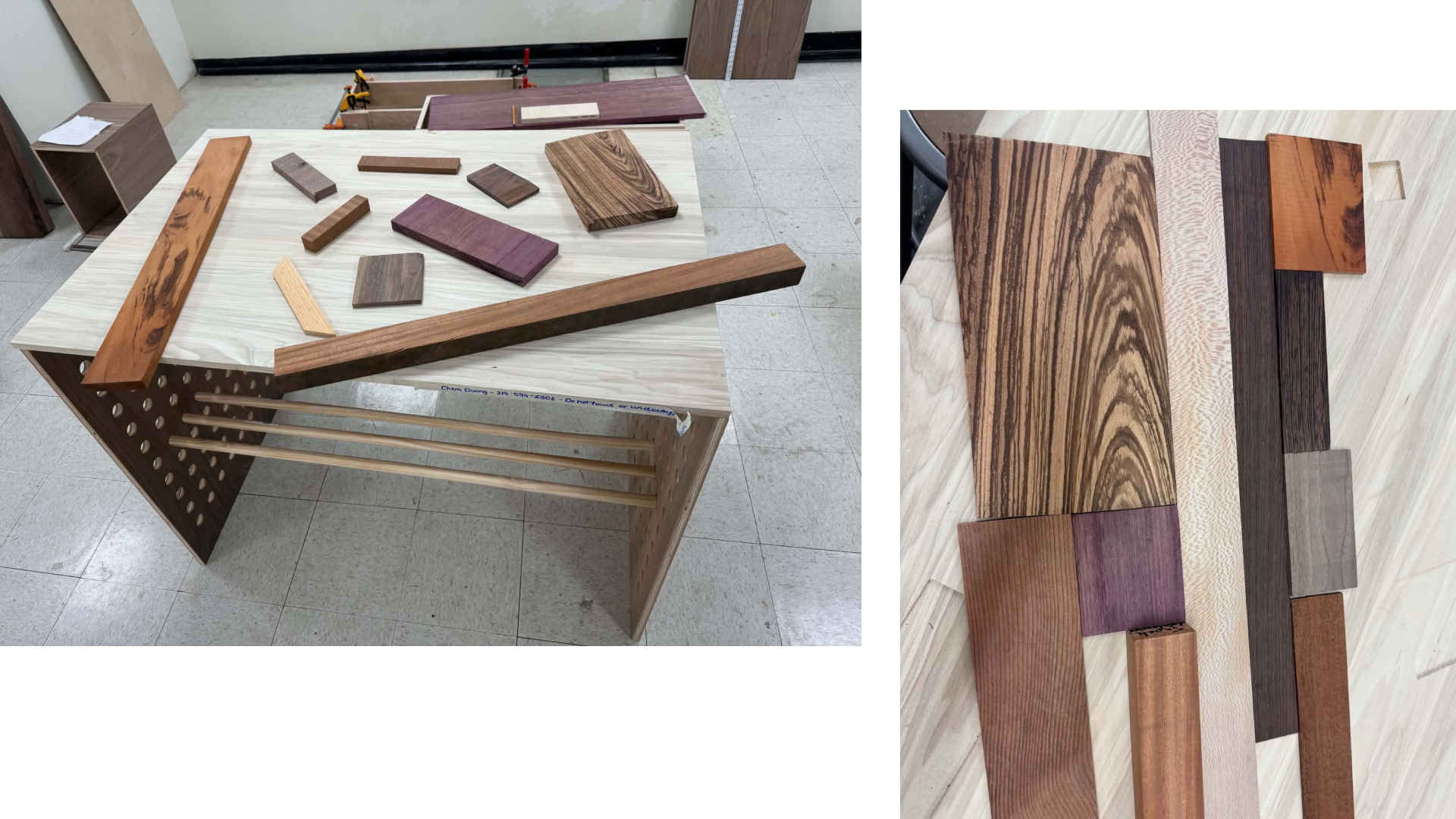
The frame was constructed from 3/4" furniture-grade walnut plywood, with mahogany used for the small trays and 1/2" maple for the drawers and additional trays. The work surface was built from poplar to provide a stable base for the inlay.
For the inlay details and hardware, I selected a variety of hardwoods, including wenge, zebrawood, tigerwood, purpleheart, sapele, lacewood, and walnut, to create visual contrast and craft the drawer knobs and tray handles.
Pegboard Side
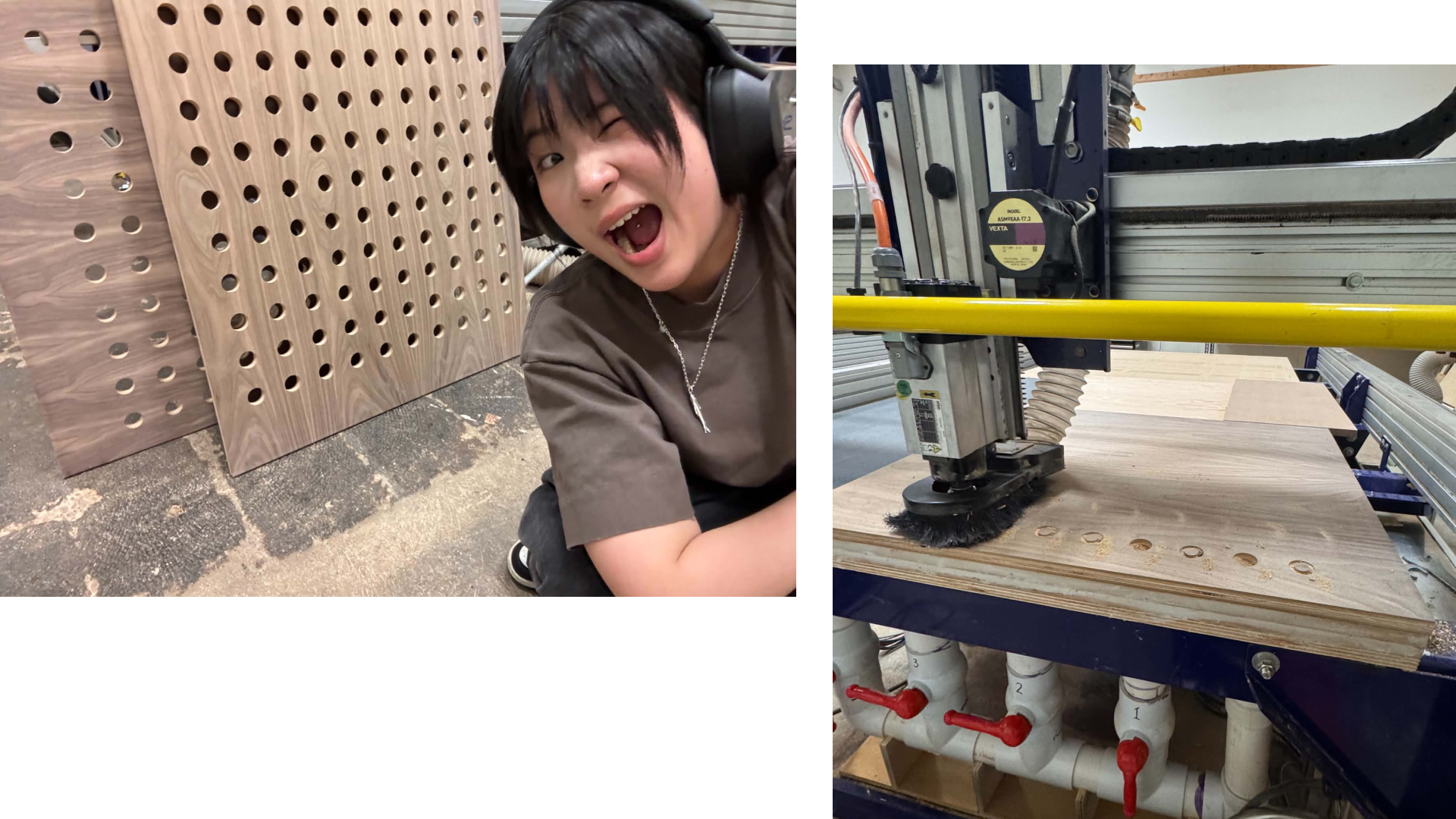
The pegboard side panels were CNC-machined to create a precise and consistent hole pattern. The pegboard system is designed to support custom 3D-printed attachments, allowing me to create and modify storage solutions over time while maximizing flexibility and personalization.
Joinery
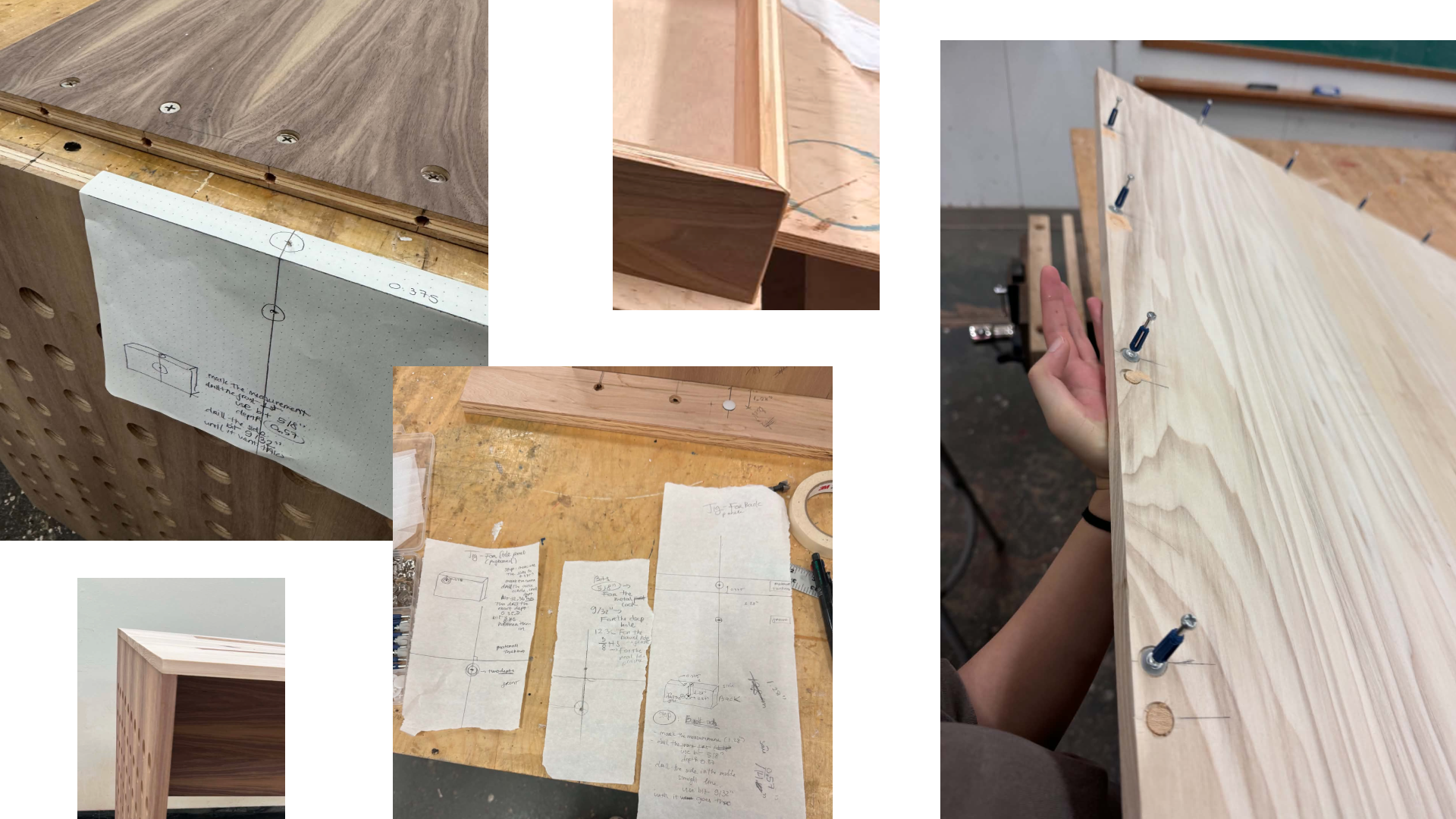
To keep the table portable, repairable, and easy to upgrade, I used cam locks to connect the tabletop, side panels, and back without permanent glue. This allows the structure to be disassembled and reassembled as needed. The main frame uses simple butt joints, while the drawers and trays use miter joints with slide-in back panels for a cleaner finish.
To ensure accurate and repeatable assembly, I also designed and fabricated a dedicated drilling jig for the cam lock system. The jig includes all hole locations, drilling depths, and drill bit sizes for each component, allowing every panel to be machined consistently while making future assembly, repairs, or replacement parts much more efficient.
Drawers & Trays
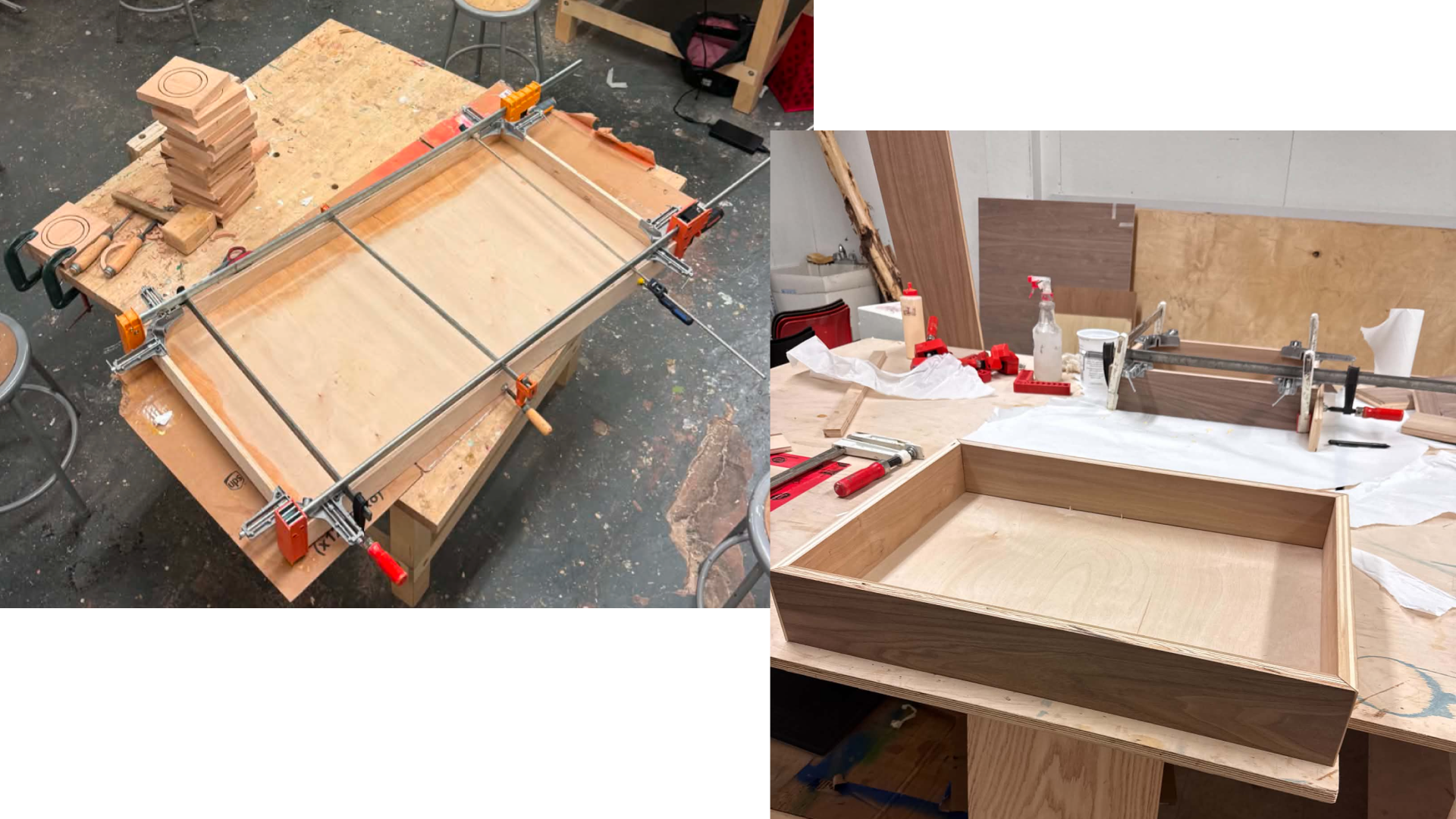
The drawer is mounted on a pair of 24" full-extension drawer slides, providing smooth operation and full access to the storage space while supporting the large drawer's weight.
The drawers and trays use miter joints for a clean, seamless appearance. They are constructed from 3/4" walnut and mahogany plywood, with 1/4" maple bottom panels set into dado joints. Unlike the main frame, these components are permanently glued to maximize strength and durability.
Knobs & Handles
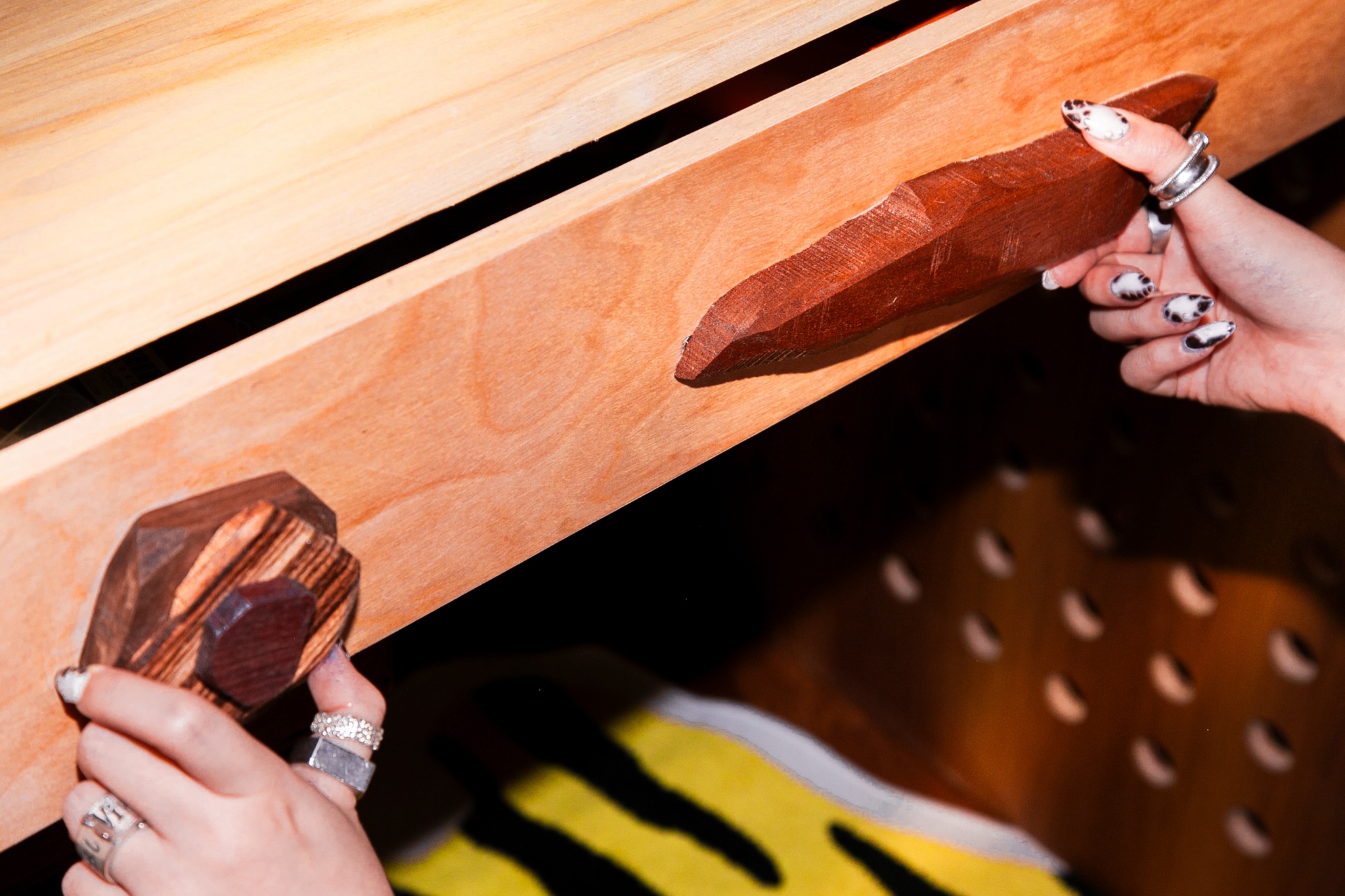
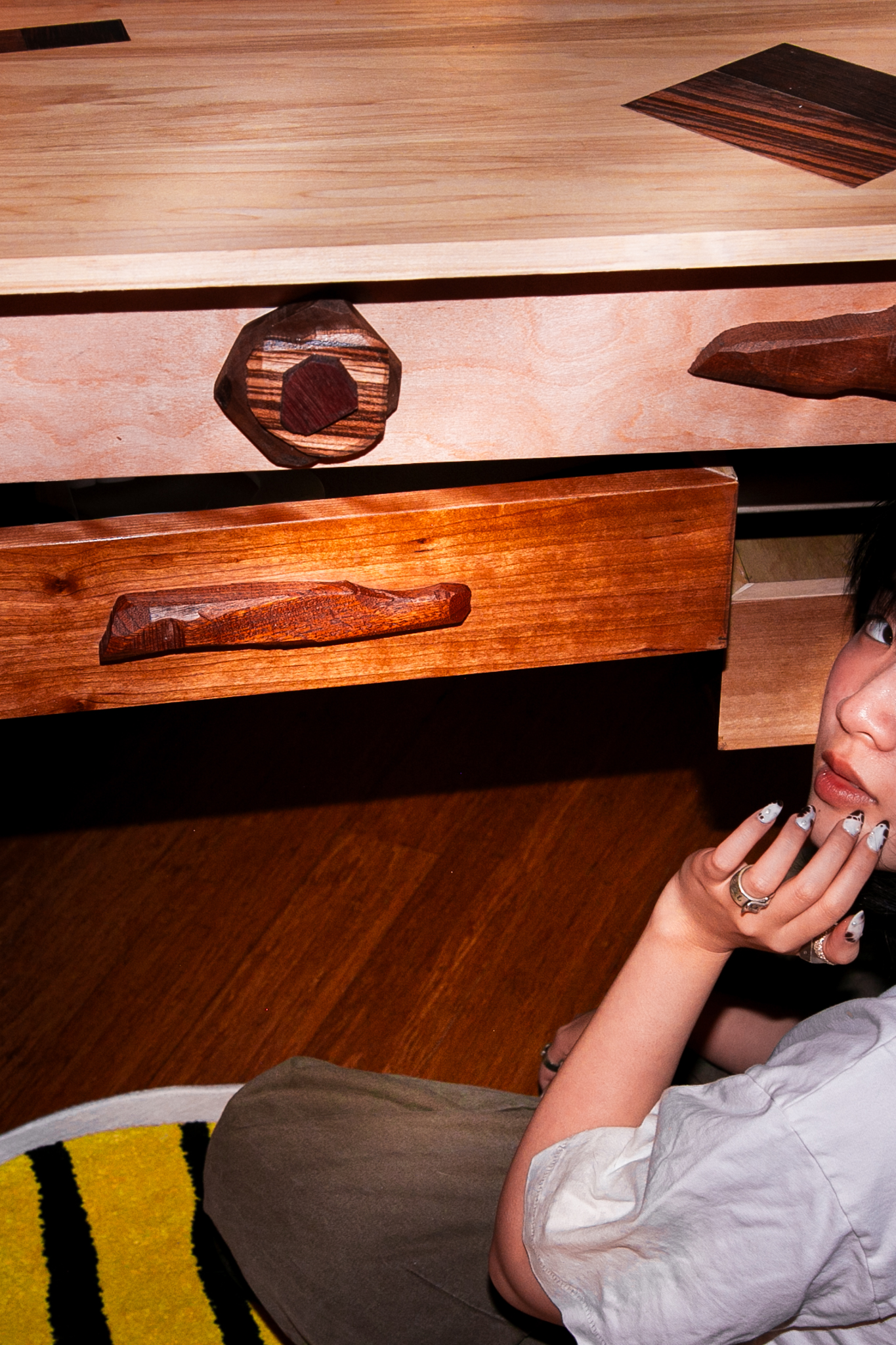
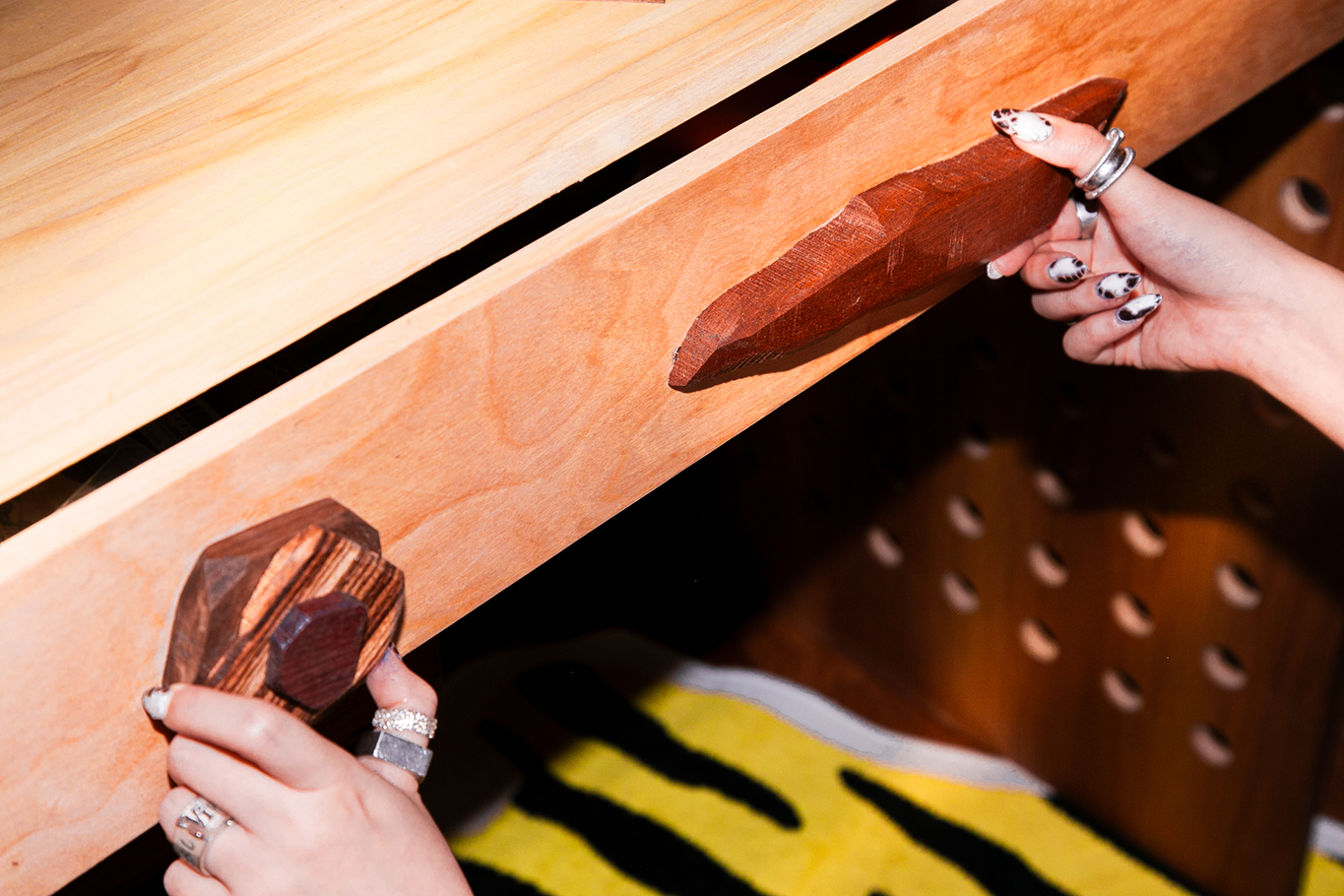
The knobs and handles were handcrafted from a mix of hardwoods, including walnut, sapele, and mahogany, to highlight the natural variation in color and grain. Each piece was shaped using the bandsaw, hand-carved, and carefully sanded to create a cohesive design language. Their organic forms emphasize the human touch and celebrate the unique character of each wood species.
Adjustable Dowels System
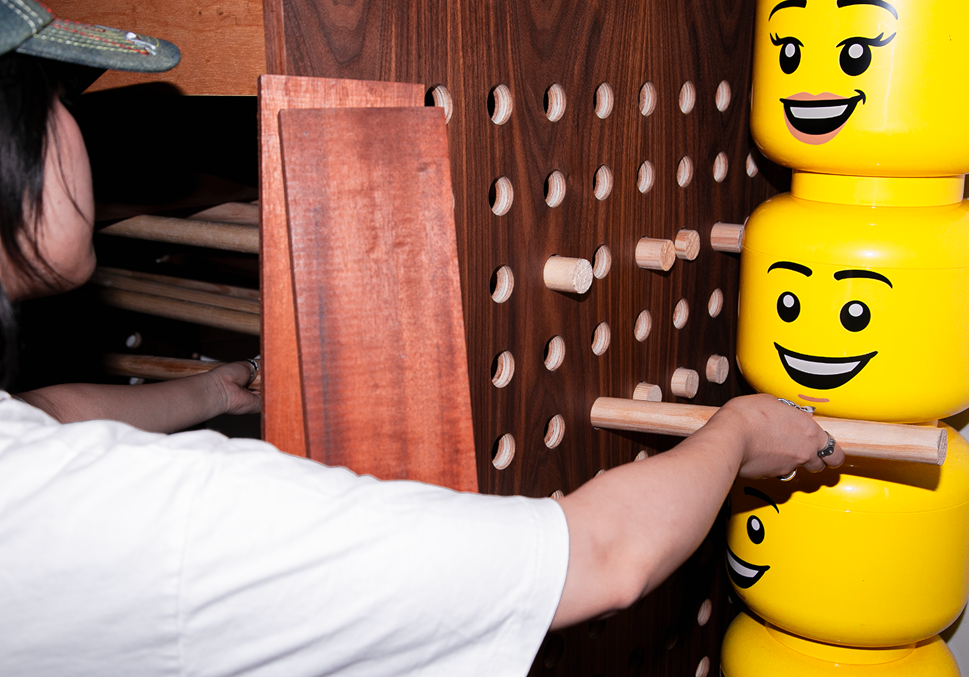
To maximize the functionality of the pegboard sides, I replaced fixed shelves with an adjustable dowel system. Nine 1-1/8" × 4' dowels pass through matching holes on both side panels, creating adjustable supports for shelves, trays, and dividers.
The shelves and trays can be repositioned to different heights depending on the project or storage needs.
The dowels can also serve as footrests or be removed entirely to create additional open storage, making the workspace highly adaptable over time.
Hardwood Tabletop
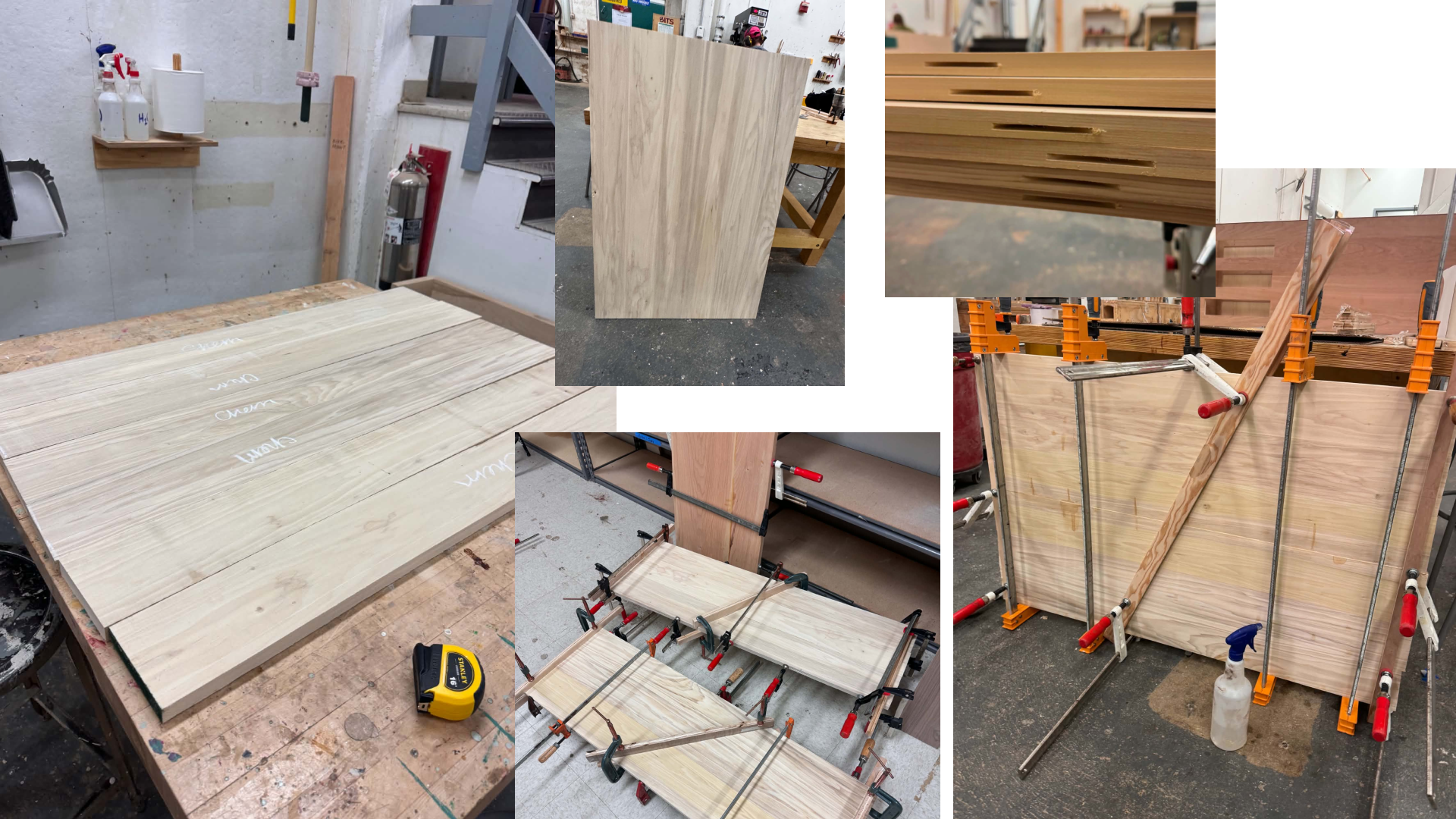
To support the inlay process and provide a durable work surface, I chose a solid hardwood tabletop. The 3.9' × 2.5' top was built by edge-gluing six poplar boards together using biscuits and wood glue to create a single large panel.
Each board was milled on the jointer and planer before glue-up to ensure flatness. Because the completed panel exceeded the width capacity of the planer, the final surface was flattened and finished by hand sanding.
Inlay
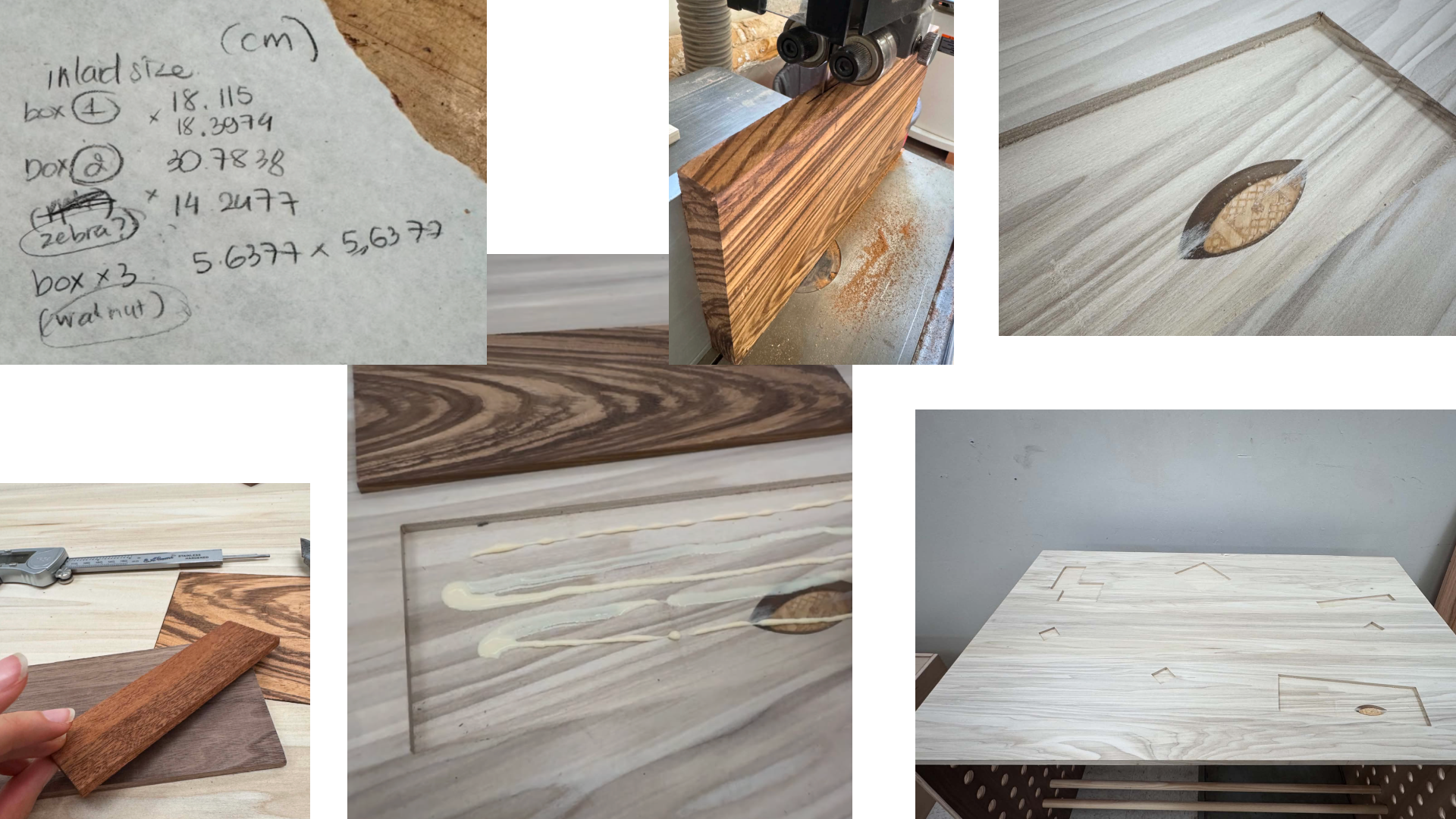
The inlay was created by routing shallow pockets into the tabletop at a consistent depth. While routing, I unexpectedly exposed one of the hidden biscuit joints beneath the surface.
Each inlay piece was measured with digital calipers for a precise fit, then glued into place to create a seamless pattern.
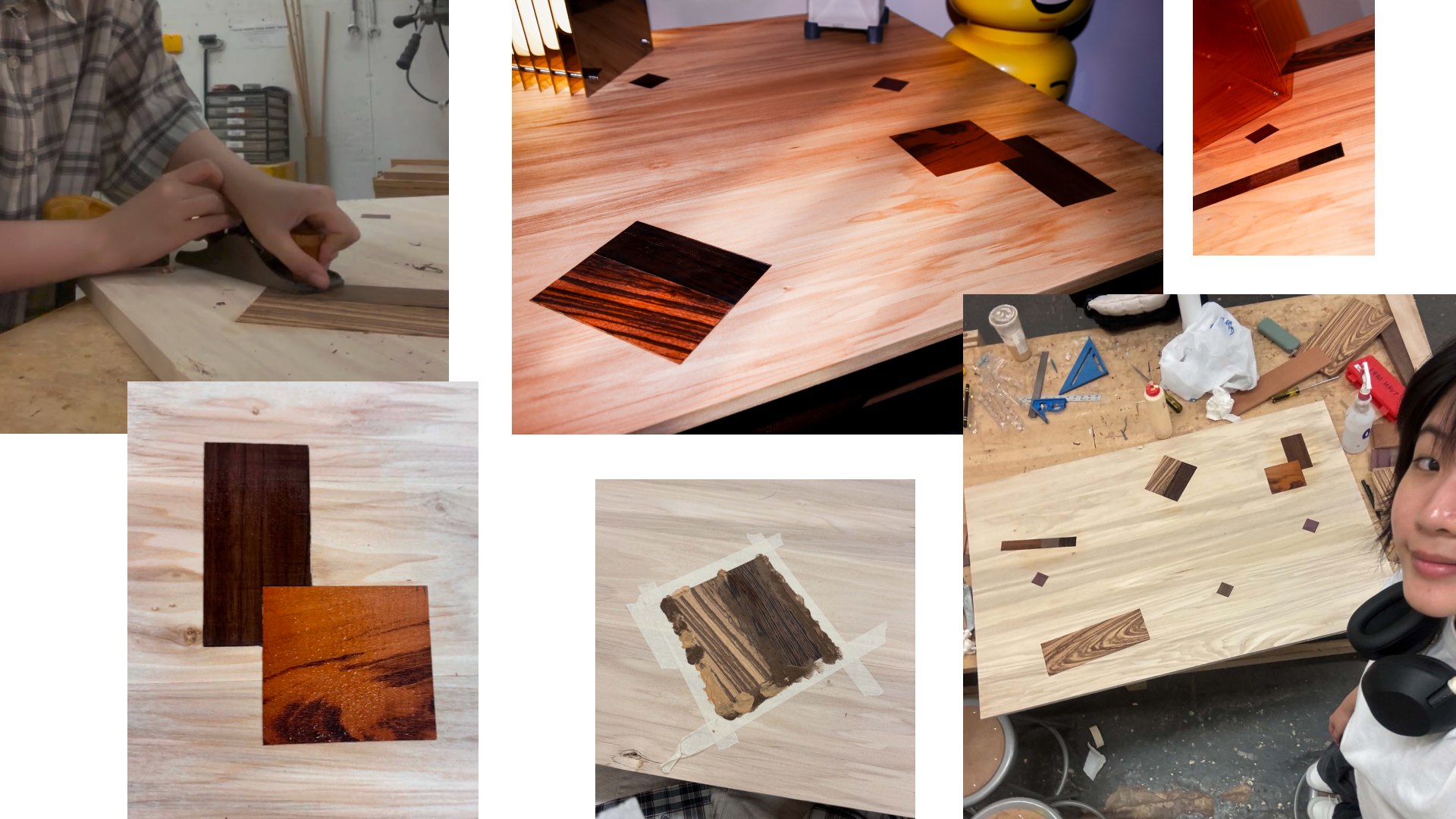
After the inlays were installed, I used a block plane to level the surface, filled any small gaps with wood filler, and hand-sanded the tabletop to a smooth finish. The inlay combines wenge, zebrawood, tigerwood, purpleheart, sapele, lacewood, and walnut, arranged in varying shapes and grain directions to create a dynamic, one-of-a-kind pattern.
Finishing
All surfaces were finished with Danish oil to enhance the natural grain and bring out the warm tones of each wood species. Edge banding was applied to all exposed plywood edges, creating a clean, refined appearance while improving durability.
Showcase